The Playground She Never Drew
The one sentence about AI that a ten year old understood in a second, and most adults still have not.
By Danielle Roberts, Founder of Kids on AI
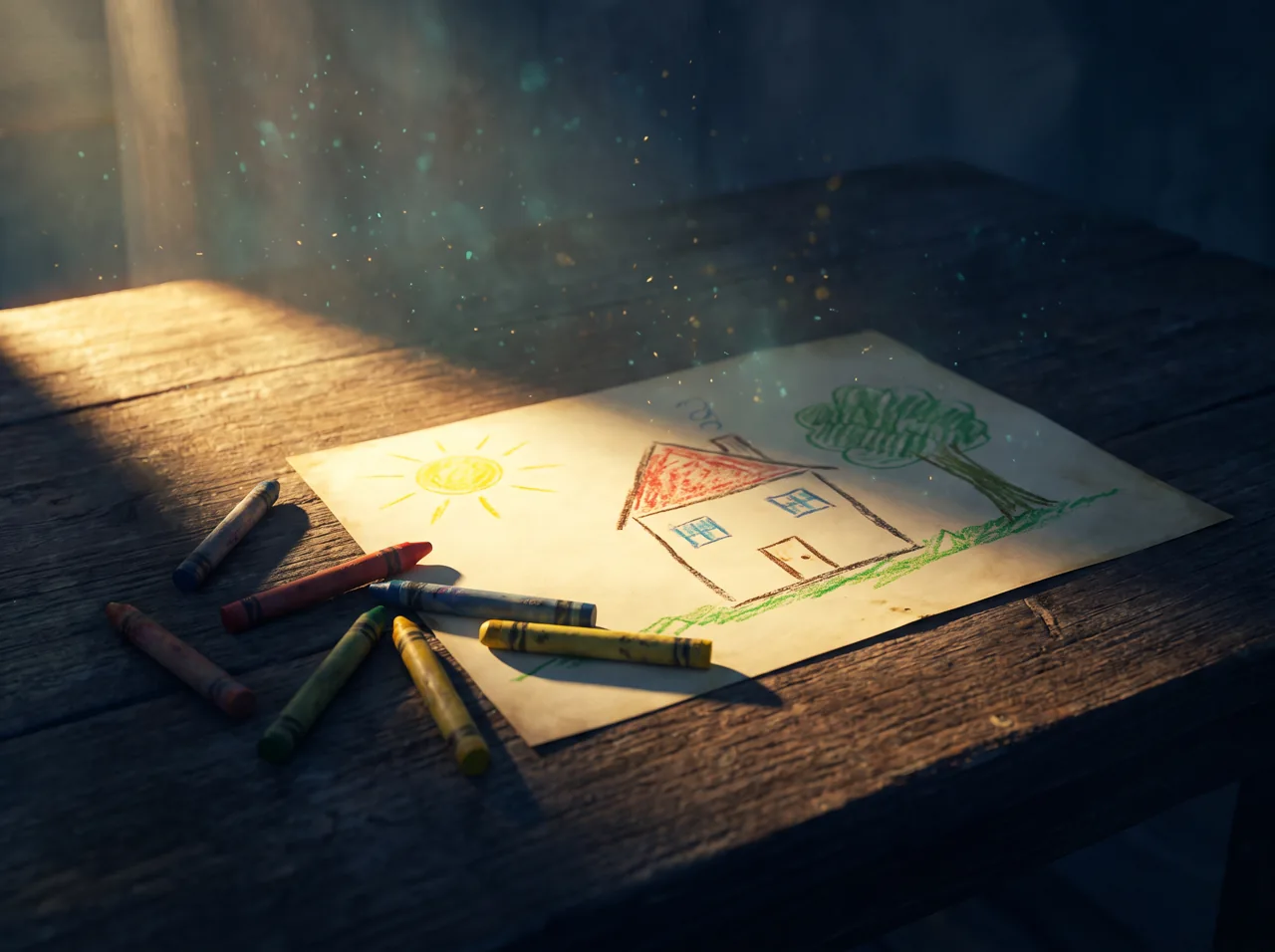
A girl in one of my classes brought a drawing she had made with crayons. A house, a sun, a tree, and herself standing in front of it. We did what we always do in the Studio. We turned it into a short animated cartoon using two AI tools, one to interpret the drawing and one to make it move.
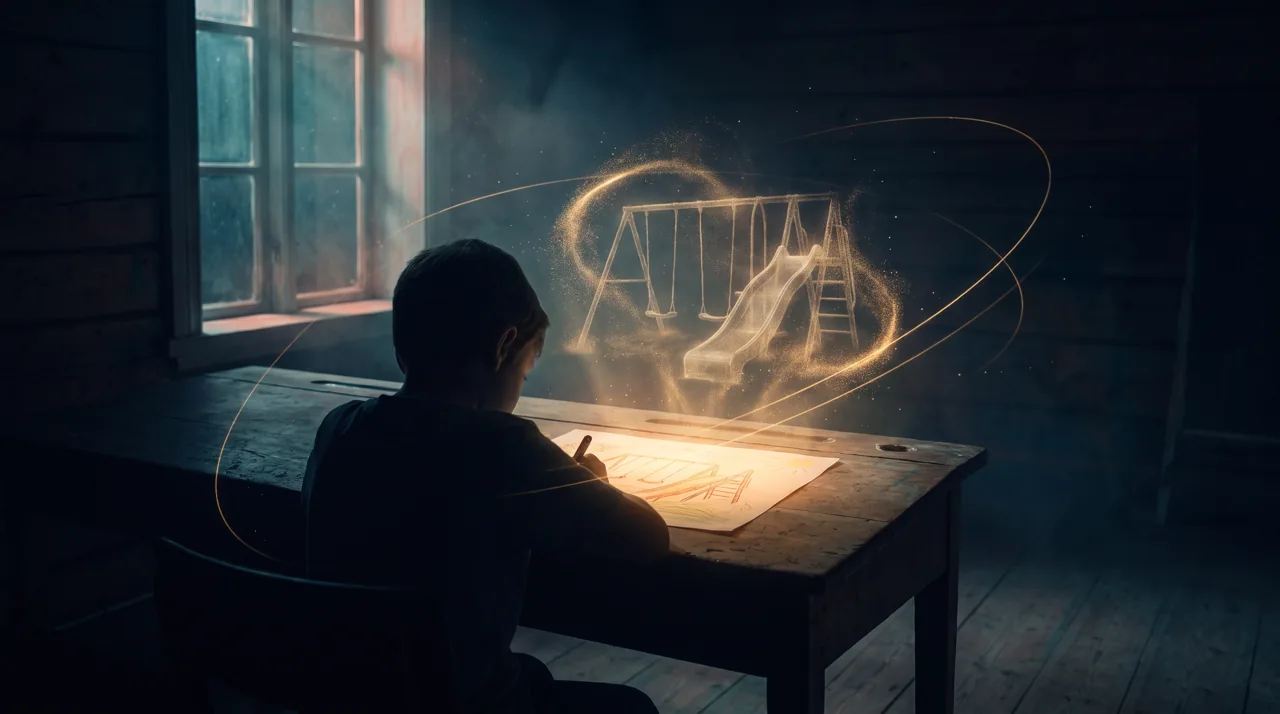
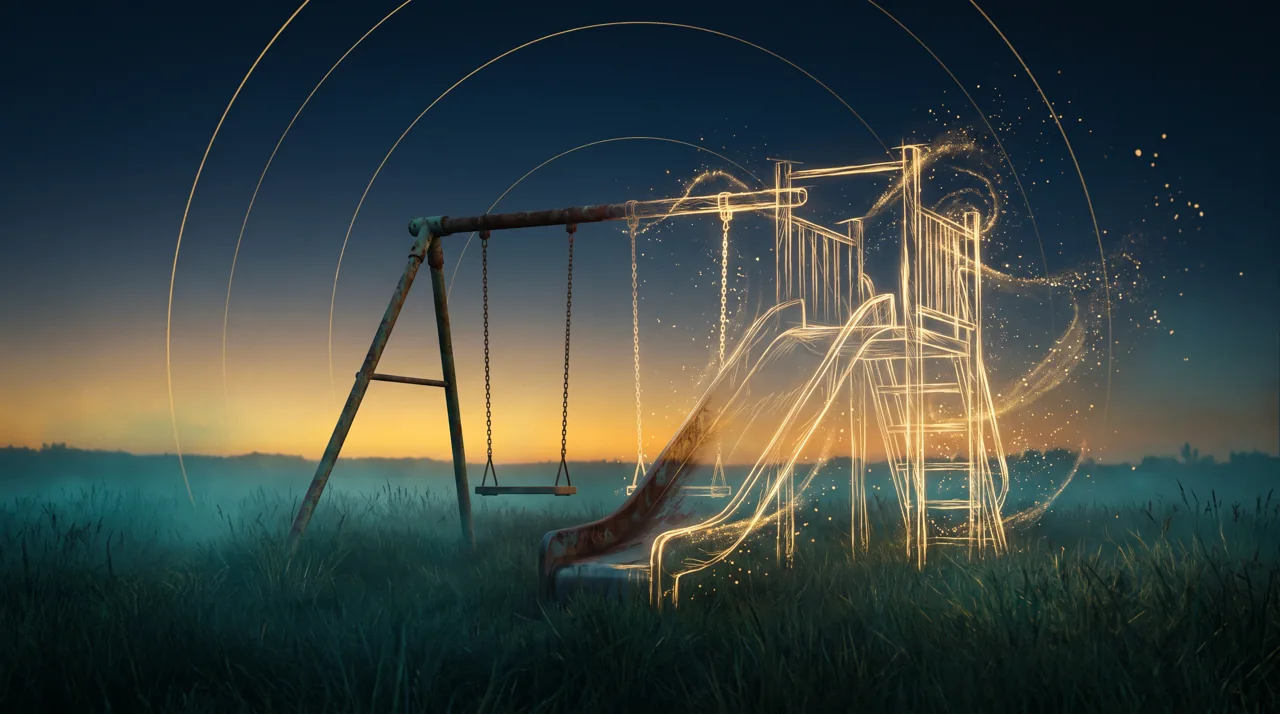
When the cartoon played, the house was there. The sun was there. The tree was there. She was there, walking. And behind her, where her drawing had shown only white paper, there was a playground. Swings. A slide. A fence.
She watched it twice. Then she turned to me and asked the only question that mattered.
"Where did that come from?"
What I told her
I told her the truth, in one sentence. The AI made that part up, because she had not told it what belonged there.
She did not need a second explanation. I watched it land. Her drawing was finished in her mind. It was a house on a day with a sun. But the paper had empty space, and the machine does not see empty space as a decision. It sees it as a gap, and it fills gaps with the most likely thing. A child in front of a house, statistically, often has a playground nearby.
That is the whole lesson. It is the lesson I now teach first, to every age, in every room.
AI fills in whatever you leave undirected.
Why this one sentence matters more than any tool
Parents ask me which AI tool their child should learn. Teachers ask me which platform is safest. Both questions assume the tool is the thing that matters. It is not. Tools change every season. The sentence does not.
A child who understands that undirected space gets filled will behave differently with every tool for the rest of their life. They will ask what they left out. They will notice when the output is more than they asked for. They will stop treating the machine as an oracle and start treating it as a very fast, very literal collaborator that needs a brief.
Adults rarely notice the seam. We read an AI paragraph and accept the parts we did not ask for because they sound plausible. We take a generated image and do not register that the background, the light, and the mood were all chosen for us. The girl noticed because the playground was so obviously not hers. Children have an advantage here. They still know exactly what they meant.
The second thing I noticed
The playground taught her about AI. What she taught me was about adults.
She was not alarmed. She was curious. Her first instinct was to ask where it came from, and her second instinct, about four seconds later, was to ask whether she could tell it to take the playground out and put in a dog instead. She wanted to direct. She did not want to be protected from the tool, and she did not want to hand the tool the pen. She wanted to be in charge of it.
Almost every adult in my workshops arrives with the opposite posture. They arrive worried. Worried that AI will take the thinking out of their children, worried that their children will fall behind, worried about both at the same time. Their worry is reasonable. But it is worth noticing that the people with the least fear are the people with the most time left to live with this technology.
I started calling this the lens of a child. What if we saw AI the way she did. Curious, unafraid, and absolutely clear that the idea belongs to the person holding the crayon.
How we teach directing now
Every Studio opens with a version of the playground. We give the whole room the same lazy prompt and let the machine fill the gaps. Then we give the same room a directed prompt, where the child has decided the setting, the light, the character, and what is not allowed. The difference on screen does the teaching. Nobody has to be told.
Then we hand over the chair. The child is the director. The AI is the sidekick. A director does not ask the crew what the movie should be. A director decides, communicates, checks the result, and sends it back when it is wrong. Those four moves are the entire curriculum, and they transfer to homework, to writing, to every tool a child will meet after ours.
What parents can do tonight
You do not need the Studio to begin. You need one drawing and twenty minutes.
- Ask your child to draw something and tell you what is in it.
- Use any image tool you already have and let it interpret the drawing with no further instruction.
- Look at the result together and ask one question. What is in the picture that you did not draw?
- Let your child give the tool a second instruction that removes what it added and puts in what they wanted.
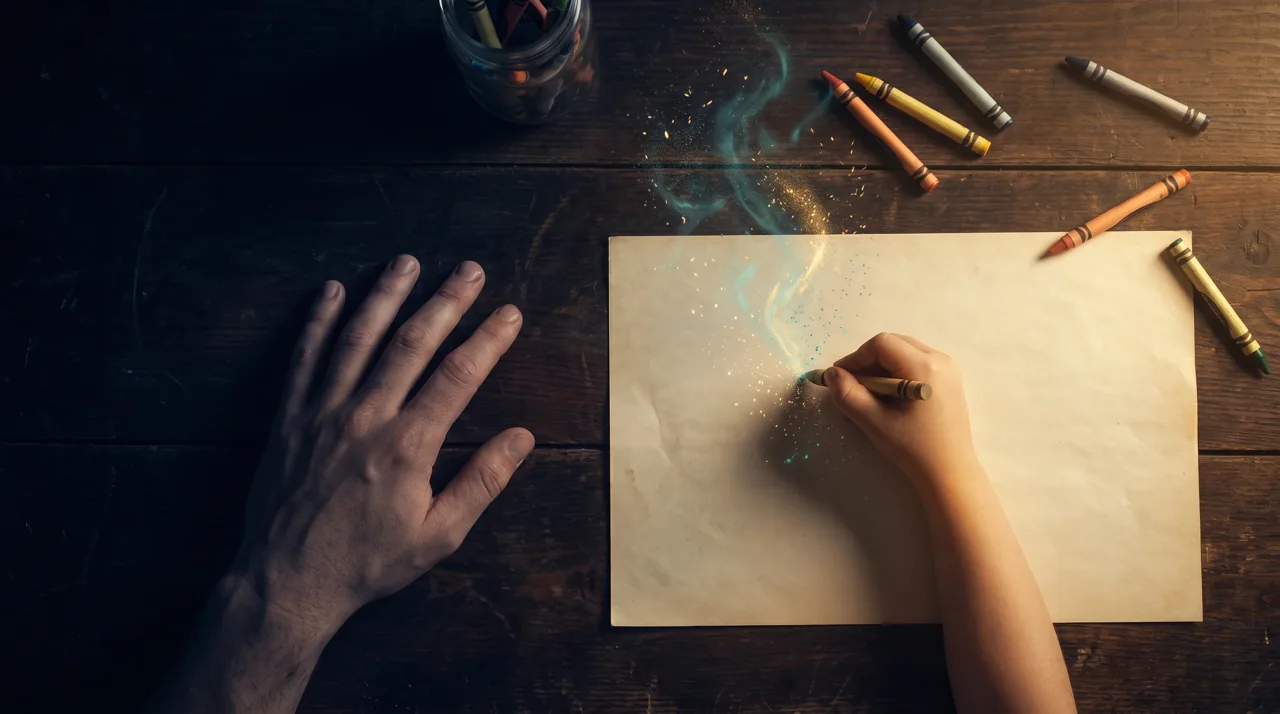
Do not explain the lesson. Let the gap do it. The sentence will arrive on its own, and when it arrives from inside your child, it stays.
Why this became a movement
I have taught photography to college students for six years and AI to executives for two. The playground was the first time I watched the most important idea in the field get understood instantly, and it was understood by the youngest person in the room.
That is when Kids on AI stopped being a class and became something else. If children can see this clearly, they should be the ones we are listening to about it. Their imagination. Their voice. Their future.

The girl finished her cartoon that night with a dog in the yard and no playground. She chose. That is the entire point.